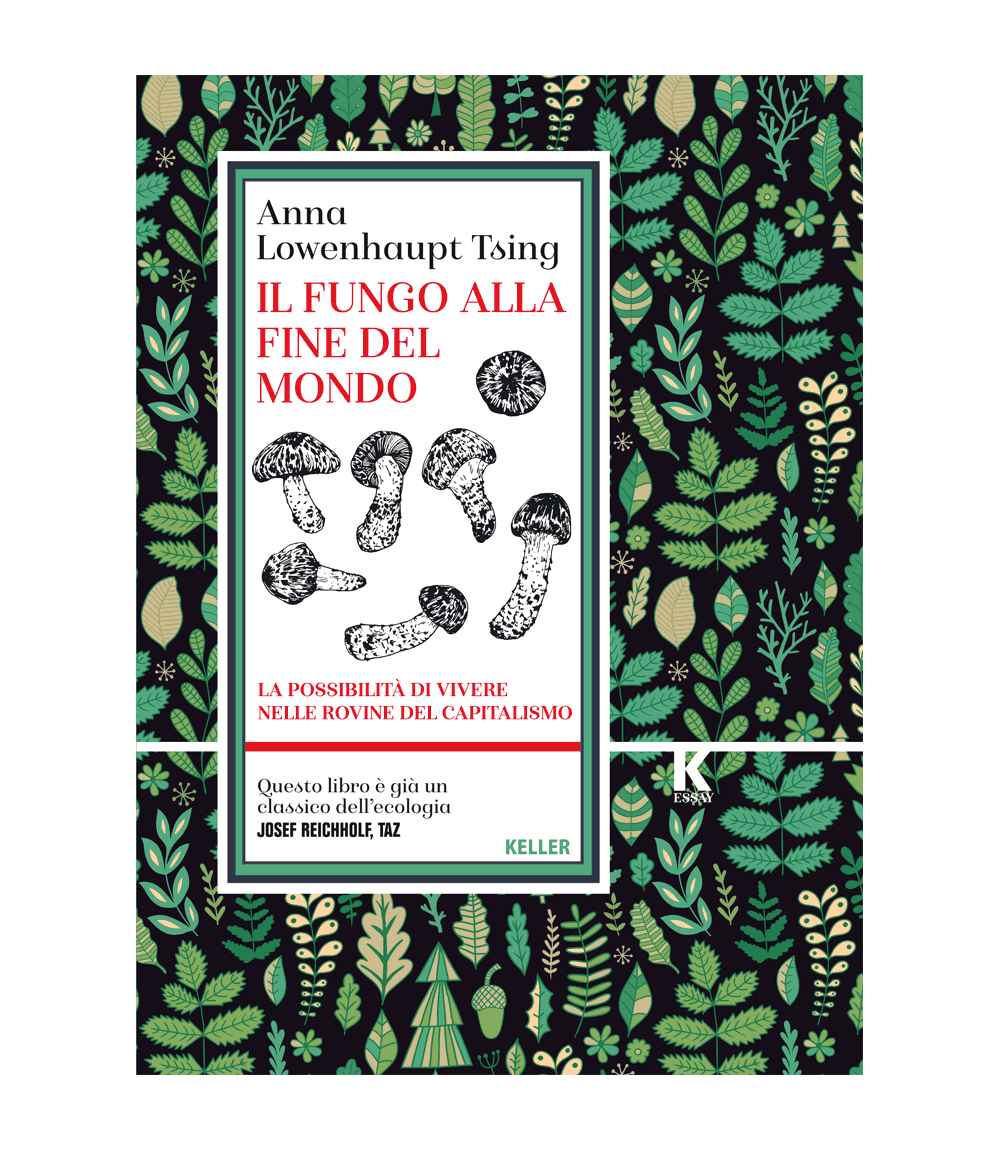
Si dice che, dopo la bomba atomica su Hiroshima nel 1945, la prima forma di vita a spuntare in quel paesaggio devastato sia stato un matsutake. Si tratta di uno dei funghi commestibili più preziosi e ricercati dell’Asia: non cresce solo in Giappone dove raggiunge prezzi astronomici, ma anche in varie aree dell’emisfero boreale. Questo fungo dall’odore intenso ed evocativo non può essere coltivato e preferisce crescere su terreni e foreste perturbati dalla presenza umana.
Il racconto di Anna Lowenhaupt Tsing – ormai diventato un classico che spazia tra etnografia, antropologia ed ecologia – ruota attorno a questi ricercatissimi funghi, offre approfondimenti e spunti che vanno ben oltre l’ambito micologico, e pone una domanda essenziale: cosa riesce a vivere tra le rovine che abbiamo generato?
Il fungo alla fine del mondo esplora angoli inattesi e inconsueti del commercio del matsutake e ci conduce tra buongustai giapponesi, commercianti arricchiti, combattenti hmong, …
Si dice che, dopo la bomba atomica su Hiroshima nel 1945, la prima forma di vita a spuntare in quel paesaggio devastato sia stato un matsutake. Si tratta di uno dei funghi commestibili più preziosi e ricercati dell’Asia: non cresce solo in Giappone dove raggiunge prezzi astronomici, ma anche in varie aree dell’emisfero boreale. Questo fungo dall’odore intenso ed evocativo non può essere coltivato e preferisce crescere su terreni e foreste perturbati dalla presenza umana.
Il racconto di Anna Lowenhaupt Tsing – ormai diventato un classico che spazia tra etnografia, antropologia ed ecologia – ruota attorno a questi ricercatissimi funghi, offre approfondimenti e spunti che vanno ben oltre l’ambito micologico, e pone una domanda essenziale: cosa riesce a vivere tra le rovine che abbiamo generato?
Il fungo alla fine del mondo esplora angoli inattesi e inconsueti del commercio del matsutake e ci conduce tra buongustai giapponesi, commercianti arricchiti, combattenti hmong, guide naturalistiche finlandesi, abitanti della costa pacifica degli Stati Uniti d’America e altro ancora. Compagni di viaggio che ci permettono di perderci e sorprenderci tra ecologie fungine e storie forestali e che ci fanno sperare nella possibilità di una convivenza collaborativa tra specie in un’epoca di massiccia devastazione umana.
Un viaggio tra i popoli e le culture sviluppatisi intorno ai matsutake, dei funghi che prosperano tra le rovine umane. Un immaginario estremamente affascinante che però si contrappone a un costante e inesorabile calo di incisività.
Resta tremendamente affascinante, seppur già vista in testi più incisivi, la critica alla visione individualista della biologia che ha dominato la storia recente.
I don't read a lot of non-fiction, but this book quite deliberately and explicitly structures itself in a rambling manner, interspersing history and anecdotes, with tangents galore. Rather than some formal thesis and organized argument, this book paints a series of encounters with matsutake mushrooms in varying contexts and perspectives, with a thematic framing.
If I had to sum it up, the book posits that progress (and even hope) are part of capitalism and its need to scale and organize and alienate; if we are to thrive in the decline of capitalism, then we need different tools that often fall in its margins: noticing, unpredictable encounters, new relationships, and more mutualism. …
I don't read a lot of non-fiction, but this book quite deliberately and explicitly structures itself in a rambling manner, interspersing history and anecdotes, with tangents galore. Rather than some formal thesis and organized argument, this book paints a series of encounters with matsutake mushrooms in varying contexts and perspectives, with a thematic framing.
If I had to sum it up, the book posits that progress (and even hope) are part of capitalism and its need to scale and organize and alienate; if we are to thrive in the decline of capitalism, then we need different tools that often fall in its margins: noticing, unpredictable encounters, new relationships, and more mutualism.
I also enjoyed this review which gets at all of this much better than I can.
Because of how much I see this book praised in lefty circles, I thought I would love it when I checked it out from the library. But as the title says, there must be something that I'm not getting about this book, because it really didn't click with me. Of course the mushroom imagery and contemplation on living a life in the ruins of capitalism were exquisite, but there were a few niggling things that bothered me. Firstly, I was not too convinced by the author's claim of "We can learn to live in the ruins of capitalism if we follow the example of people who either are or are descended from people who fought explicitly to uphold capitalism and imperial exploitation of their own countries, and people who claim what they're doing is capitalism in its purest form!" Undoubtedly, these people are living a pericapitalist existence to borrow the …
Because of how much I see this book praised in lefty circles, I thought I would love it when I checked it out from the library. But as the title says, there must be something that I'm not getting about this book, because it really didn't click with me. Of course the mushroom imagery and contemplation on living a life in the ruins of capitalism were exquisite, but there were a few niggling things that bothered me. Firstly, I was not too convinced by the author's claim of "We can learn to live in the ruins of capitalism if we follow the example of people who either are or are descended from people who fought explicitly to uphold capitalism and imperial exploitation of their own countries, and people who claim what they're doing is capitalism in its purest form!" Undoubtedly, these people are living a pericapitalist existence to borrow the author's own term, but shouldn't we strive for something more? Something that actually centres community, the refusal of exploitation, and building better and if needed unofficial institutions? And more specifically, something that explicitly names capitalism as the source of these ills, and seeks to find something to transcend it? Something just seemed missing to me there.
The second thing that rubbed me the wrong way was the author's description of Matsutake as being a capitalist product only when it was shipped from Vancouver to Japan. The author's description of Matsutake when it arrives in Japan is that of the seller trying to find the best home for the Matsutake, not necessarily the best price. This disregards the fact that brokers and agents are still valid methods of employment within capitalism, and that if looked at from a materialist perspective, the Matsutake remains a capitalist commodity, that is, something that is produced to be sold on the market, regardless of whether it will be a good fit with its eventual customer. There are more theoretical quibbles that I have, but it seems to me that this is more a work of poetry (in some cases explicitly) rather than the somewhat academic book it claims to be.